
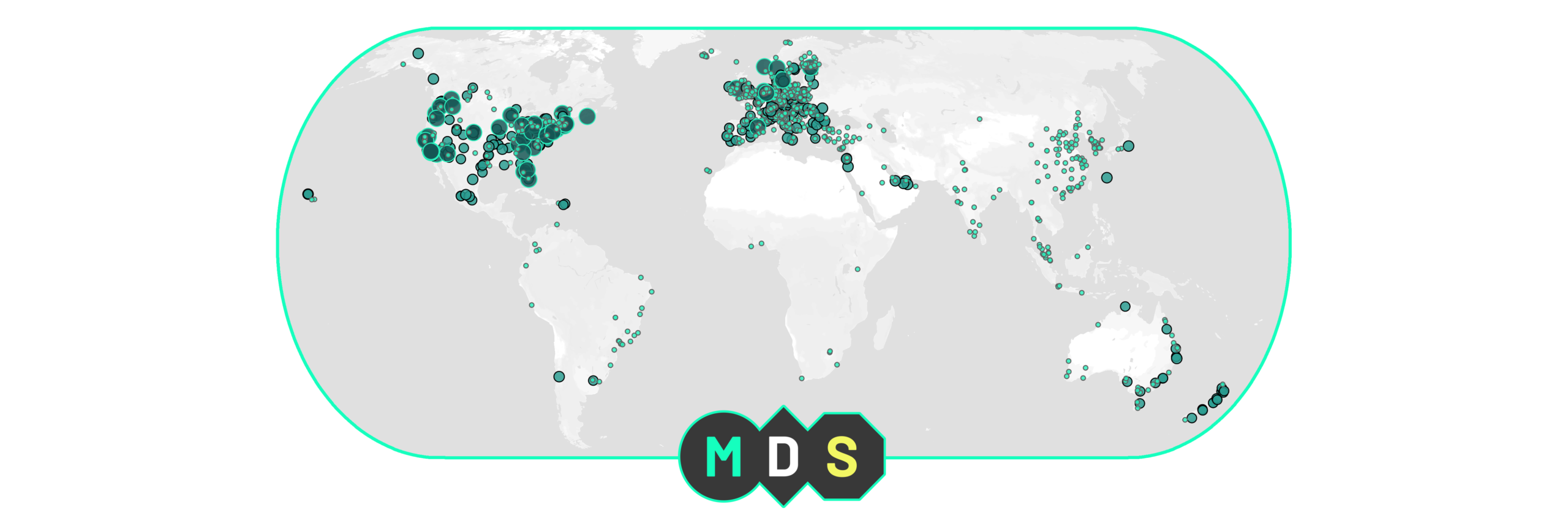
The Open Mobility Foundation is proud to announce the launch of Mobility Data Specification (MDS) 2.1. This update boasts major improvements to digital mobility and infrastructure — and a whole host of new features. This MDS 2.1 release is now live on our GitHub home page.
Each new feature in MDS 2.1 builds and improves on existing functionality to better meet the needs of cities, operators, and residents. Key features equip cities with more tools to digitally manage and communicate real-time policy and understand incidents for for-hire AVs, delivery services, transit, and more.
Developed over the past two years and with hundreds of contributions from dozens of participants in both the private and public sectors, this release is packed with new features that deepen the application of MDS across the public right of way and we’re grateful to our members whose work made MDS 2.1 possible. Special thanks to those OMF Members from Boston, Bergen, DC, San Francisco, Blue Systems, INRIX, and Populus who went out of their way to contribute significantly to the latest release. Learn all about the new features by watching the launch meeting.
Expanded Modes and Services Scope
MDS 2.1 provides new and improved support for a wider range of mobility modes and services. We’ve expanded passenger services to cover for-hire robotaxis, and fixed-route services like shuttles and busses. Fleet operations include city fleet vehicles for services like sanitation, snow plows, street sweepers, code enforcement, and the like. Delivery covers more than sidewalk robots, now including app delivery, packages, freight, goods, and food.
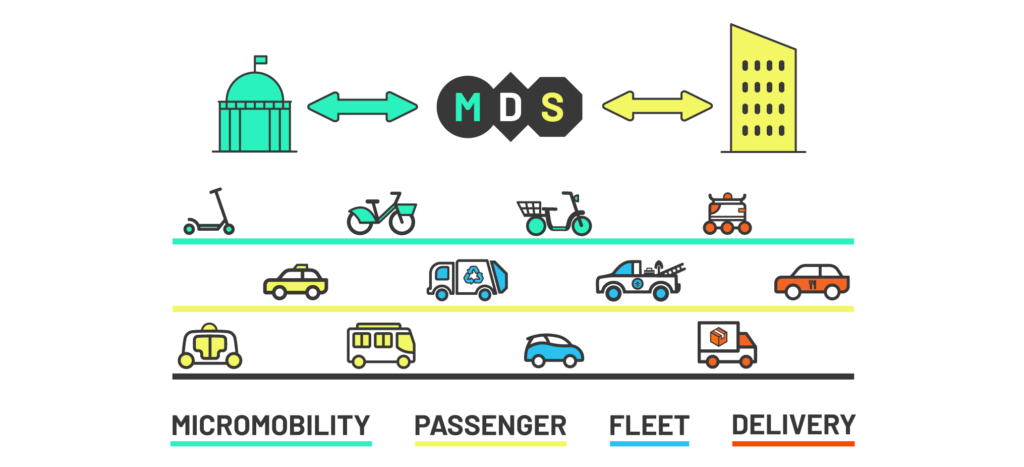
If there is a vehicle moving in the public realm, odds are that MDS now supports it.
Safety: Incidents and Crashes
A new endpoint for MDS to capture safety events such as collisions, near misses, harsh braking, remote takeovers, obstructions, autonomous vehicle driving takeover and disengagements, theft, vandalism, and unplanned stops.
Each incident includes basic information about vehicles in the short term, like location, date, key times, severity, medical response, accelerometer data, etc, and more detailed future information available via updates and linking to external reports.
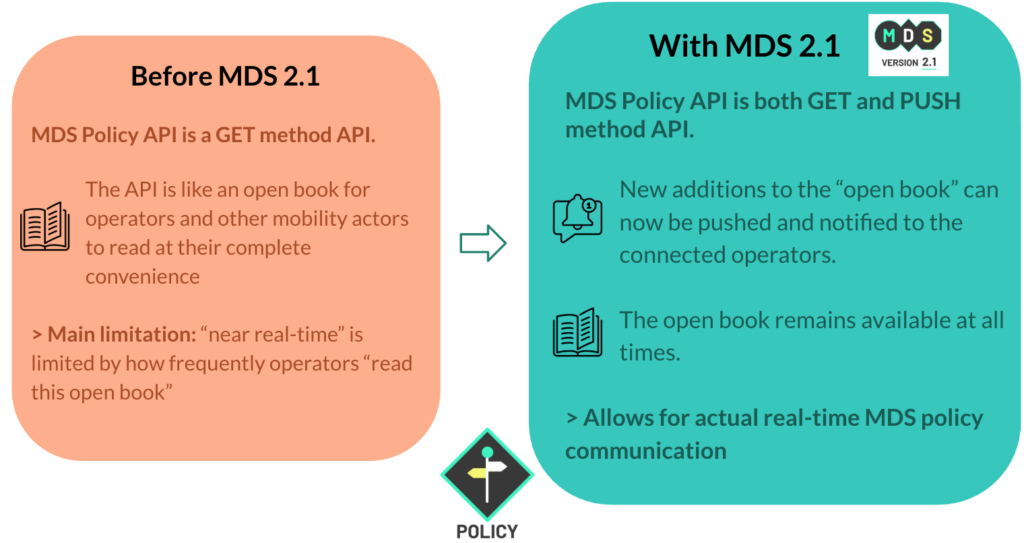
Image credit: Pierre Bouffort from Blue Systems
All of this is connected to MDS via telemetry points, which includes time and location of vehicles, whether they are on a trip or not, for all MDS Modes.
Collision, near miss, and other incident information for AVs came from DDOT’s required management of for-hire AVs, micromobility and bike share, car share, and personal delivery devices, and Amsterdam’s near miss and crash data analysis for bike and e-bikes.
Delivery: Expanded Operations Features
Comprehensive support for delivery operations, including app delivery, goods, food, freight, packages, and sidewalk robots. Delivery supports services with employees or gig contractors, autonomous, remotely, or directly piloted.
MDS can understand one or multiple orders on different trips at the same time, in succession, or overlapping. The MDS state machine tracks the trip states of the orders separately from the vehicle state, and can provide as much or as little detail as required for different programs.

A complex trip and order example for the new Delivery mode
The need for this update came from Boston’s city council’s need to understand delivery operations and safety, and LADOT’s ghost kitchen policies.
Real-Time Digital Policy
We’ve enhanced real-time digital policy in MDS 2.1, with more precise geofencing and optional push-based communications, allowing down to the second emergency response notifications.
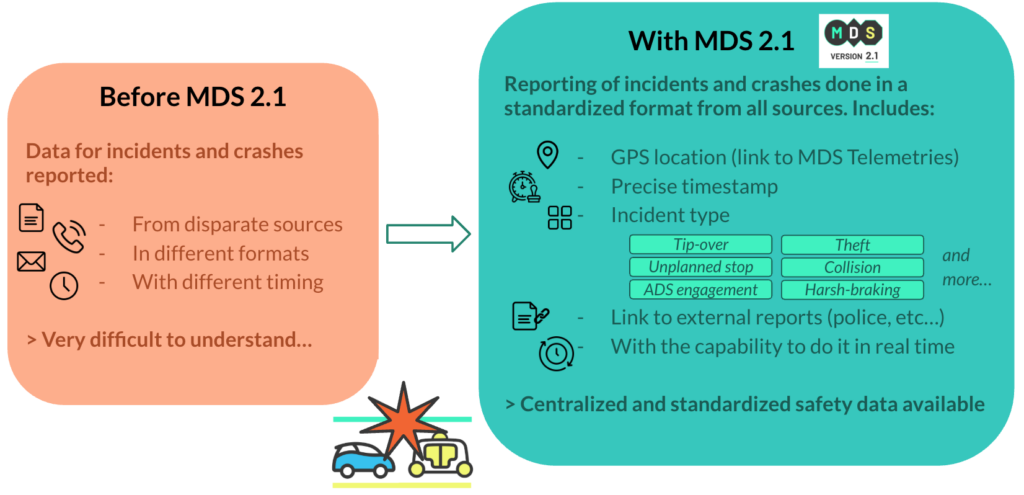
Image credit: Pierre Bouffort from Blue Systems
This update was driven in part by work being done with Seattle’s “Digital Conflict Area Awareness Management Program” with Blue Systems on converting real-time 911 calls into MDS policy and geofencing for autonomous vehicles, built in OMF’s public working groups.
Additional Features
That’s not all; MDS 2.1 also made important updates alongside these features, including:
- Fixed-route transit integration with GTFS trips, stops, and schedules, driven by SFMTA’s commuter shuttle program needs.
- Clearer support for autonomous for-hire services, including robotaxis.
- New enforcement and violations capabilities to connect operational events with enforcement actions.
- Cross linking to other specs and resources with the External References feature
- Custom attributes and fields for your unique program and jurisdictional needs
- More vehicle lifecycle operations, options, and event clarifications
These features reflect the growing role of MDS as a platform for digitally managing the public right of way — not just for micromobility, but for freight, transit, curb management, autonomous vehicles, and emerging real-time transportation services.

Implementation and Resources
While the OMF team is excited for MDS 2.1, we recognize that publishing a specification is not the same thing as implementing it. The OMF believes that adoption happens when professionals understand it, trust it, see others using it, and have a community they can turn to when questions arise. There are number of resources available for you to review and help you get started:
- GitHub: Updated with new information on the main page, wiki, releases page, and release notes
- Website: MDS overview with links to key resources, updated for 2.1
- Use Cases: Database of use cases, updated for MDS 2.1
- Policy Language: Updated policy language and guidance for cities that wish to write MDS into their operating policy, permits, tenders, or RFPs
- Blog Post: This blog post you are reading, announcing the MDS 2.1 release
- Slide Deck: OMF & MDS and 2.1 overview in presentation format
- Media Release: Summary of these items for traditional and social media (coming soon)
- OpenAPI: Schema to support your technical development of MDS 2.1 (volunteer-driven, let us know if you want to help)
The OMF also invests in opportunities for our community to learn, connect, and collaborate throughout the year. The second half of OMF’s calendar in 2026 is packed full of these opportunities.
Learn all about the MDS 2.1 release and watch the recording of our launch meeting to get more information on all the available features.

This is the first in a three-part series about the Read more

Technology and data offer new tools to proactively manage curbs Read more
The 1.1.0 release adds new top level APIs, privacy options, Read more