
This year’s CoMotion LA, set in the heart of Little Tokyo in downtown Los Angeles, set the stage for the next phase of digital transformation. What’s next? We have several takeaways about the evolving landscape of digital infrastructure.
As an official Impact Partner of CoMotion LA, the Open Mobility Foundation produced four sessions, created hands-on experiences, and brought city and commercial members together to explore how digital infrastructure can improve safety, efficiency, and trust in our streets. Across the entire program, several common threads emerged:
Seeing Is Believing: Digital Infrastructure Works Best in the Real World
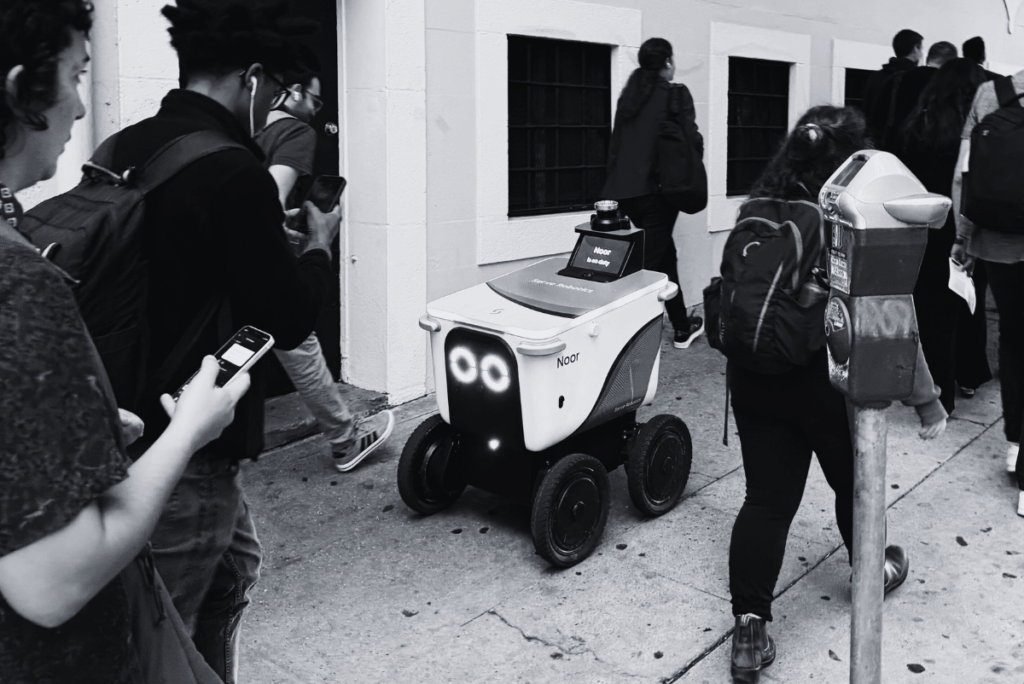
One of the highlights of CoMotion LA was the Digital Infrastructure Walking Tour. With the help of our OMF commercial members, who served as “Digital Infrastructure Docents,” attendees stepped out of the auditorium and into downtown Los Angeles to see technology in its natural habitat. We’ve received great response from attendees, and a remarkably consistent reflection on the value of these kind of tours.
There is an uncanny power in shifting from a slide deck to a sidewalk. Seeing sensors, cameras, data hubs, and curb-activity tools functioning in the environment they were designed for gives public-sector leaders a deeper understanding of what works, what doesn’t, and what questions to ask next. This tangible experience also gives the private sector more accurate, grounded feedback on how to design tools that actually solve city problems.
In 2026, we intend to accelerate opportunities for our community to demonstrate their innovations in real-world environments.
Standards Are About to Have Their Moment
A theme we first noticed at ITS World Congress intensified at CoMotion LA: the industry is finally beginning to recognize that interoperability is not a luxury — it’s a necessity. Public agencies and private companies are confronting the consequences of everyone speaking a different data language. The result is costly, inefficient, slow, and often inequitable.
At CoMotion, panelists and city leaders repeatedly underscored the emerging reality: as cities become more fluent in digital infrastructure, they will increasingly request and require standardized data. Private companies, too, are recognizing the business advantage: It is far easier to scale, deploy, and support customers when they share a common language.
Specifications like MDS and CDS aren’t abstract technical tools; these standards are catalysts for improved efficiency, safety, and trust — and they continue to evolve. CDS 1.1 was just released, and look for MDS 2.1 to be released in early 2026.
Rapid Iteration Is Here
If there was one undercurrent running through every conversation at CoMotion LA, it was this: the rate of technological, economic, and policy change is accelerating. Quickly.
Cities are grappling with:
- Real-time data expectations;
- New mobility modes and form factors;
- Budget constraints;
- Political pressure to show impact; and
- A marketplace shifting under their feet.
Private companies feel this too. Everyone is trying to build, regulate, and deploy faster than ever — and the ride will not be smooth. But the takeaway wasn’t pessimistic, it was collaborative: it’s clear that we can only navigate this pace of change if we do it together.
A Moment for Philanthropy: Helping Cities Catch Up
One theme rose to the surface that deserves special attention: the public sector is being asked to operate in a digital ecosystem that is evolving faster than its tools, staff capacity, and funding allow.
Philanthropy can play a clear role in shaping this ecosystem.
At CoMotion, we previewed the OMF Academy, a professional-development initiative we intend to expand in 2026. Its purpose is simple but urgent: help public agencies build the digital literacy and operational capacity necessary to adopt and apply data standards like MDS and CDS effectively. Philanthropic investment is uniquely positioned to accelerate this transition.
A Call to Cities: Join Us
One message we emphasized throughout CoMotion, and a message worth repeating here: membership in the OMF is free for public-sector agencies. There are no required dues or hidden commitments.
The only “ask” is simple: participate, share what you know, and ask what you don’t. The OMF exists to convene this community so we can solve shared problems together. As the industry enters a period of rapid change, this collaborative model isn’t just helpful, it’s essential. Consider becoming a member if you’re not one yet.
Looking Ahead
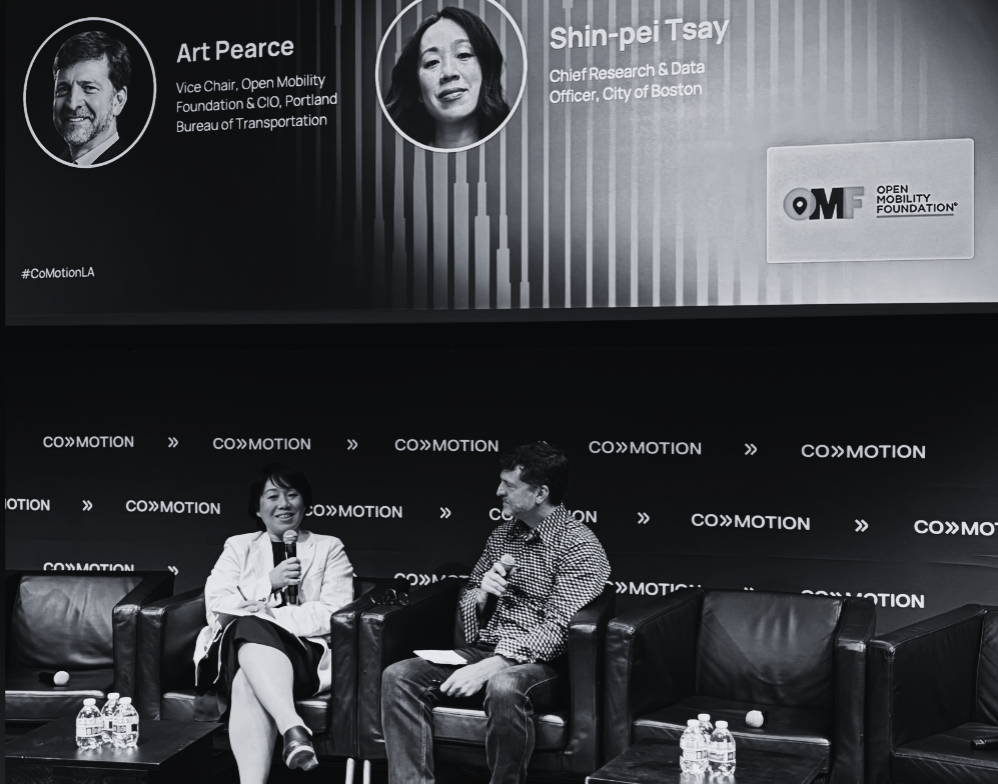
CoMotion LA made it clear: the next chapter of digital infrastructure will be shaped by collaboration, shared language, real-world learning experiences, and a willingness to evolve together. We’re grateful to everyone who joined our sessions: the keynote with Boston and Portland; the panel with Minneapolis, Philadelphia, and Los Angeles; the walking tour made possible by our private-sector members; the OMF Academy preview; and the reception at Arts District Brewery that capped it all off.
2026 will be a year of action, and the OMF is ready to lead alongside our members, partners, and the broader mobility community.


Whether they’re handling an emergency or just a planned road Read more

This is the first in a three-part series about the Read more