
The Curb Data Specification (CDS) continues to evolve as cities gain hands-on experience managing the public right-of-way in an increasingly complex mobility landscape. The upcoming CDS 1.1 release reflects months of collaboration, testing, and feedback from the Open Mobility Foundation’s SMART Curb Collaborative, a group of ten cities that have all implemented curb digitization pilots.
CDS 1.1 is now in the final stages of approval and is expected to be officially released in early November. This update represents a major step forward in how cities can describe, measure, and manage their curbs. You can view more info on the launch on the release page.
Defining the Details: Curb Objects
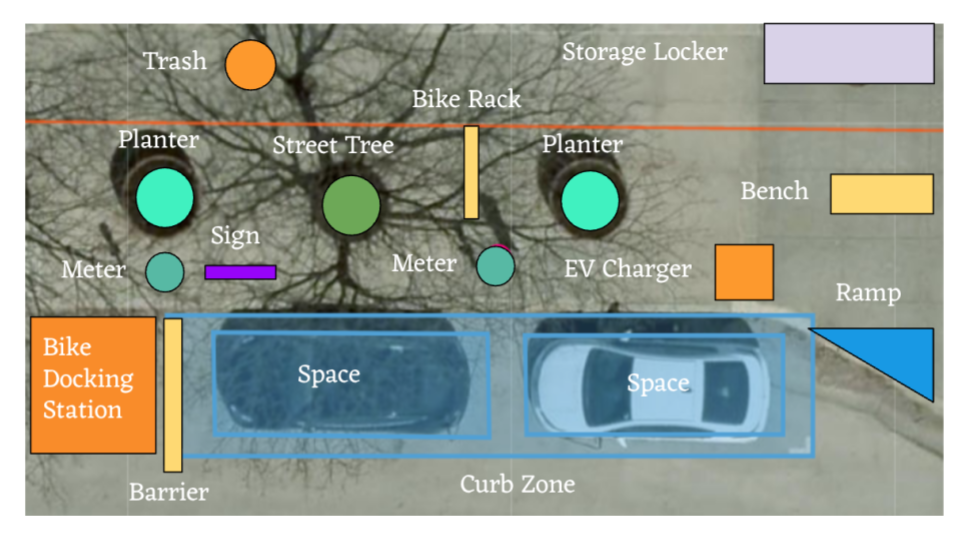
Cities need to know what’s at the curb before they can manage what happens there. CDS 1.1 introduces a new Curb Objects model that defines the location, properties, and uses of physical and digital assets for things like loading zones, meters, signage, or bike corrals.
This more detailed representation of curb assets allows agencies to connect their mapping data with policies and operations, making it easier to understand how each space functions at a specific point in time. Collaborative cities identified this need early on as they mapped their curb space, and the addition of curb objects builds directly from their field experience.
Understanding How People Pay
To make curb management more equitable and accountable, cities need insight into how payments happen, whether through apps, meters, or other systems. The Payment Methods update in CDS 1.1 enables agencies to collect and track multiple payment types and transaction IDs.
This flexibility supports modern curb pricing by helping cities test new pricing models, coordinate across operators, and improve transparency in how curb space is used.
Moving Toward Real-Time Operations
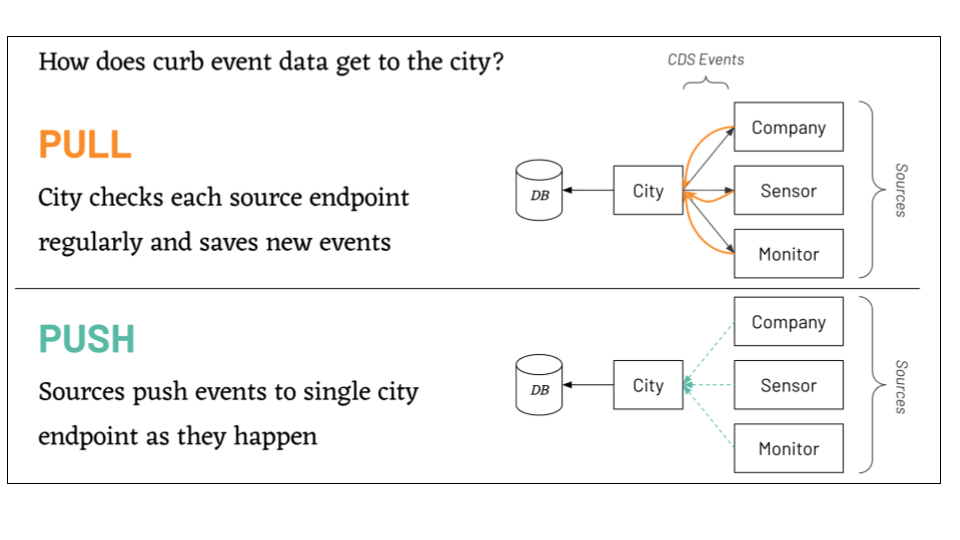
One of the most significant updates in CDS 1.1 is the addition of Real-time Events, which lets operators push event data directly to agencies as it happens. This optional feature streamlines communication and opens the door to more responsive curb management. Using real-time events, freight operators can now notify the city when a commercial vehicle starts or completes a delivery.
Members of the SMART Curb Collaborative emphasized the importance of real-time insight for managing dynamic zones, shared spaces, and safety-critical areas. CDS 1.1 delivers on that need with a standardized, interoperable approach.
Building Connections: External References
CDS doesn’t exist in isolation: it complements other standards already used by cities and operators. The new External References feature makes it easier to link CDS data with related sources like WZDx, CWZ, GBFS, GTFS, and MDS, enabling richer integrations and cross-system analysis.
This change was driven by city use cases that required connecting curb data with construction work zones, micromobility services, or public transit information, reinforcing CDS’s role as part of a larger open data ecosystem.
Smarter Sensing: Computer Vision and Vehicle Properties
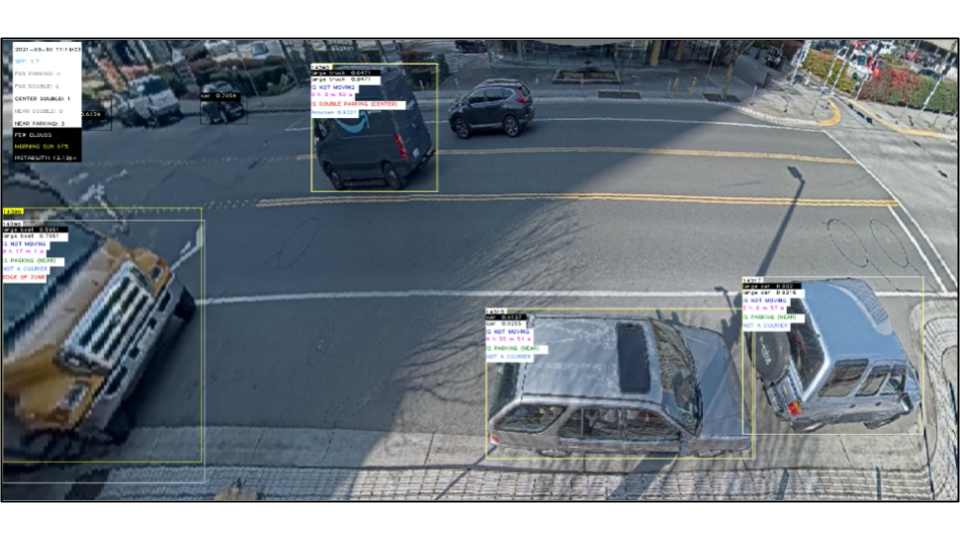
Cities are increasingly turning to computer vision and other tools to understand how vehicles interact with the curb in real time. CDS 1.1 expands the standard’s vehicle properties to better support this growing source of information.
In addition to existing optional fields such as vehicle identifier, license plate, permit number, length, type, and propulsion type, new properties can now capture richer detail gathered from camera-based systems or operator data feeds. These enhancements make it easier for cities to integrate automated sensing technologies, enabling more accurate, data-driven management of curb zones while maintaining flexibility across different data collection methods.
–
As cities continue to modernize their curbs, CDS 1.1 offers a more practical and connected foundation to guide that work. The updates are a direct reflection of what’s been learned in the field by cities at the forefront of testing and implementing new curb technology and practices.
Thanks to the insights from the SMART Curb Collaborative, CDS is not just keeping pace with innovation — it’s helping cities lead it. If your city is looking to implement a dynamic curb program, consider joining the 2026 Curb Collaborative; the interest form is now open through the end of October.
Interested in learning more about CDS and getting a front-row seat to the collaborative process of managing the specification? Join the next Curb Working Group on November 4, 2025, and sign up to receive updates on the working group.

Over the past year, stakeholders from across the transportation ecosystem Read more

Now an official release, CDS 1.0 is a new digital Read more

This comprehensive guide outlines how the OMF and APDS work Read more